
Overcoming School Refusal: A Parent’s Support Guide
School refusal is a child or teenager’s frequent refusal to attend school over a prolonged period of time for various reasons. The child gets distressed over having to attend school, and they do not hide their reluctance or refusal from their caregivers.
School refusal differs from truancy where one skips school without parental knowledge, and is often associated with delinquent behaviours.
What does school refusal look like?
Apart from explicitly saying or pleading “no” to school, the child may complain of physical pains like headaches, nausea and stomachaches, present with worry or anger, throw tantrums by crying, screaming, or refusing to get dressed for school. They may also express distress when talking about school or threaten to engage in self-harm if they are forced to go.
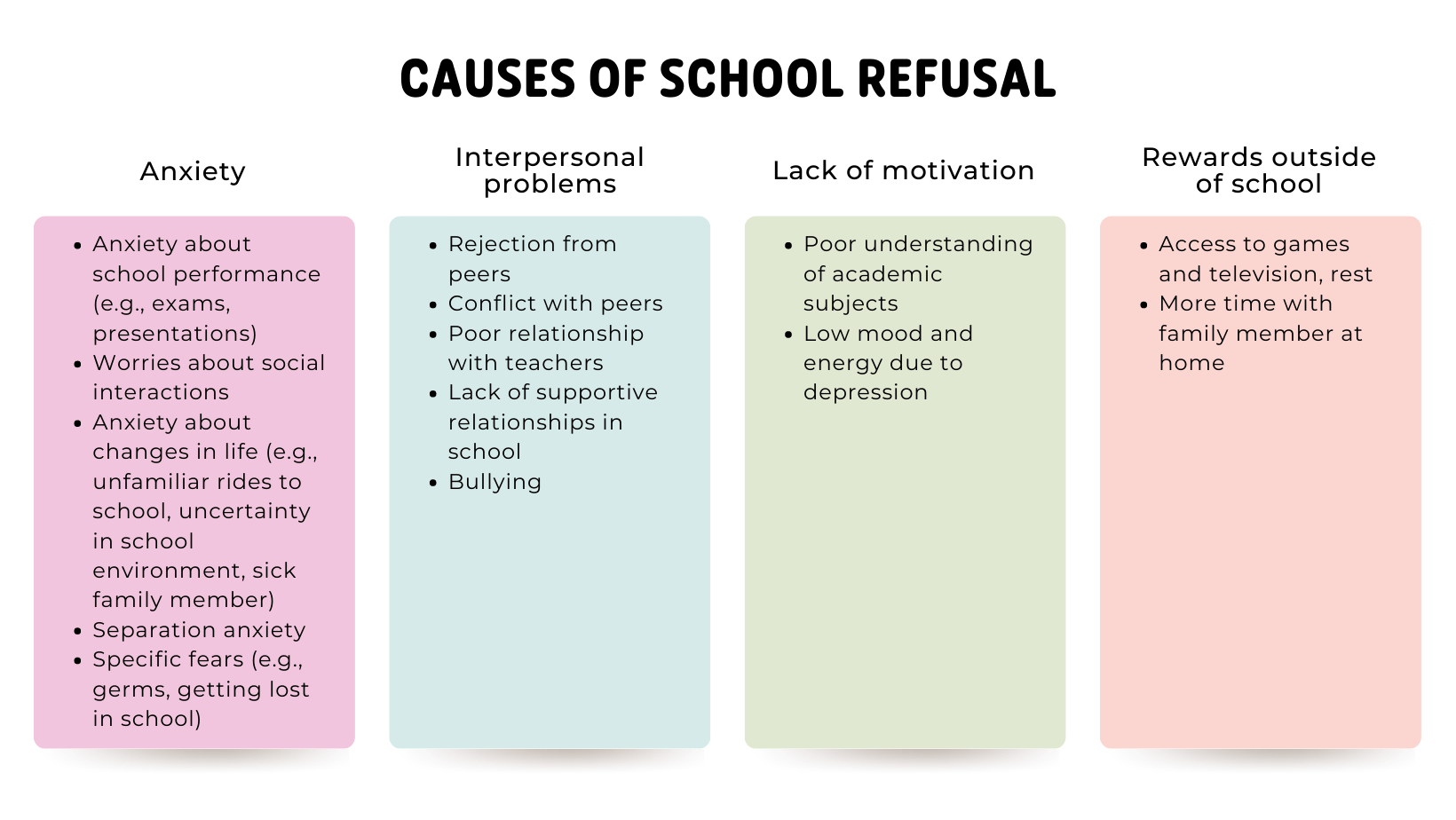
What can parents do?
It is normal for parents to feel anxious and stressed out when children skip school. We want to get them back in school as soon as possible because we worry that they would find it hard to keep up academically after frequent absence from school. Their refusal to attend school may also mean additional work for us as we need to specially arrange a caregiver for them now that they are at home.
-
First, we need to identify and address the underlying reason for our child’s behaviour since that would inform our follow-up actions.
Try finding out what is causing your child to avoid school by gently asking questions like “what is making school feel hard?”, “what is it about school that feels bad to you?”, or “if you could change one thing about school, what would it be?”.
If children find it hard to explain what makes school difficult for them, try prompting with the different activities that typically happen in school (e.g., on the way to school, meeting friends, language lessons).
Take on a curious and empathetic stance. Whatever they are feeling is valid, and they would want us to recognise that.
-
Some children may experience big outbursts like panic or distress when faced with the prospect of going to school.
In these instances, parents need to focus on regulating the anxiety and fear before any ‘next step’. This includes taking time to pause in these moments, focus on deep or paced breathing, or self-soothing techniques (like squeezing a stress ball, listening to music, imagining a safe space and so on).
These techniques should also be encouraged and practised when children are calm.
-
If your child is feeling anxious or worried about certain situations that is deterring them from going to school, you could try the exposure hierarchy which is also known as graded exposure.
Learn from your child the situations that scare them, and get them to rank the situations from least to most feared. Work out a plan to expose them to each feared situation in ascending order of fear.
They should only work up the order after they successfully cope with the preceding situation (e.g., call parent once during school before the parent tries to be pick up the child from school late). This gets the child to sit with their anxiety and learn that they can handle that discomfort. With each completion of the graded exposure, parents could reward the child to reinforce their positive behaviour.
While this is a useful approach, you may need advice from a professional (e.g., child psychologist or school counsellor) to decide on the graded levels of exposure.
-
State specific and clear expectations for your child’s behaviours calmly. While you may offer a reward to the child for going to school, be firm about setting firm guidelines on what the reward is and when it will be given.
It may be helpful to set a structured routine for school too. This may look like a regular timing for bed and to wake, where to get the school uniform and the school bag. Predictable schedule helps to reduce anxiety and ease resistance.
-
For children whose unhelpful thought patterns are driving their school refusal, you could evaluate with the child if those thoughts are accurate:
e.g., “what is the evidence supporting this thought? How about evidence against?”)
Or how avoidance may perpetuate or exacerbate the anxiety:
e.g., “I can see why you skip school…you don’t have any friends in school. But what do you think would happen if you continue skipping school?”
This approach may be more suitable for older children as younger children may have yet to develop the cognitive ability to identify and evaluate thoughts.
Ψ Seek professional support
School refusal is a tricky problem. You would most likely require support from the school or professionals like child psychologists, social worker, and student welfare officer to work out a back-to-school plan.
They could advise on the exposure hierarchy, how to improve the motivation of the child, monitor anxiety-provoking situations in school, or help ensure that the child sticks to the routine through home visits.
It can feel like an uphill battle to get your child to go to school but you are not alone. Reach out for help!