
Sibling Conflict: Teaching Fairness Without Refereeing
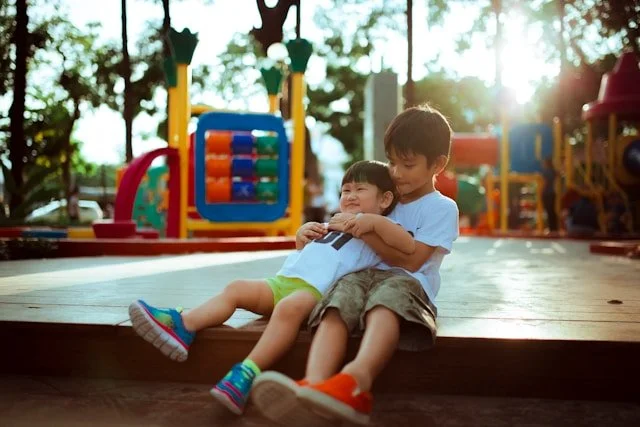
How to guide children through disagreements while building fairness, independence, and stronger sibling relationships
It often starts with something small. A toy, a turn, a comment that feels “unfair”.
Within minutes, voices are raised, someone is in tears, and you are being pulled in to decide who is right.
If this sounds familiar, you are not alone. Many parents find themselves stuck in the same cycle of stepping in, settling the argument, and hoping it does not happen again five minutes later.
But constant refereeing does not actually teach children how to handle disagreements. What helps more, in the long run, is learning how to guide them through conflict instead.
Why Children Argue So Often
When children argue, it is rarely just about the toy or the turn. There is usually something deeper going on.
Young children are still developing the ability to manage big feelings. Frustration, jealousy, and disappointment can feel overwhelming, and arguments become an outlet for those emotions.
At the same time, their understanding of fairness is still quite rigid. Many children believe fair means “exactly the same”, which can make everyday situations feel unequal.
It is also common for children to compete for attention, even in subtle ways. Small differences in time, praise, or perceived favouritism can quickly lead to tension.
Add in differences in temperament, such as one child being more sensitive and another more assertive, and conflict becomes almost inevitable.
Why Stepping In As a Referee Can Backfire
It is completely understandable to want to resolve things quickly. However, when parents consistently step in to judge and decide, children may:
Rely on adults to solve their problems
Focus more on “winning” than understanding each other
Struggle to resolve disagreements when no adult is present
Over time, this can make conflicts feel bigger and harder to manage.
A More Helpful Role: Coaching Instead of Refereeing
Coaching does not mean ignoring arguments. It means staying involved, but in a way that helps children build skills.
Start by Pausing
If the situation is safe, give your children a moment to try working it out themselves. This communicates that you believe they are capable.
Step in when:
There is physical aggression
One child is clearly overwhelmed
The situation is escalating rather than settling
Acknowledge Both Sides
Before solving anything, help each child feel heard.
You might say:
“You’re upset because you were using it first.”
“You really want a turn, and that feels frustrating.”
When children feel understood, they are often more willing to listen and problem-solve.
Clarify the Problem
Children can get caught up in blaming each other without clearly identifying the issue.
Gently summarise: “Both of you want the same toy at the same time.”
This shifts the focus from “who is wrong” to “what can we do about it”.
Let Them Be Part of the Solution
Instead of offering the answer immediately, invite them to think: “What can we do so this feels fair for both of you?”
If needed, guide them with simple options:
Taking turns
Playing together
Choosing something else temporarily
When children come up with solutions themselves, they are more likely to follow through.
Teach That Fairness Is Not Always Equal
This is a key learning point.
Fairness does not always mean everyone gets the same thing. Sometimes it means each child gets what they need in that moment.
For example, a younger child may need shorter turns or more support. Explaining this calmly helps children develop a more flexible and mature understanding of fairness over time.
Give Them Words to Use
Many children argue because they do not yet have the language to express themselves clearly.
You can model simple phrases such as:
“Can I have a turn after you?”
“I don’t like that, please stop.”
“Let’s find another way.”
Practising these outside of conflict makes them easier to use during tense moments.
Stay Neutral, Even When It Is Difficult
It can be tempting to take sides, especially when one child seems more at fault. However, staying neutral helps both children feel safe to engage in problem-solving.
Focus on:
Describing what happened
Guiding the process
Avoiding labels like “naughty” or “selfish”
When Arguments Keep Happening
Some patterns repeat, such as one child grabbing or another withdrawing. In these cases, a bit more structure can help.
You might:
Set clear family rules (e.g., “We ask before taking”)
Prepare children in advance for turn-taking situations
Spend individual time with each child to reduce competition for attention
Consistency matters more than perfection. Children learn through repeated experiences, not one-off conversations.
Supporting Your Children Through Everyday Disagreements
When children argue frequently, it can feel draining and never-ending. It is easy to fall into the habit of stepping in quickly just to restore peace. However, each disagreement is also an opportunity.
Instead of seeing these moments as problems to fix, they can be viewed as chances to teach children how to:
Express their needs
Listen to others
Compromise
Repair relationships
These are lifelong skills that extend far beyond childhood.
Final Thoughts
You are not just managing noise or stopping arguments in the moment.
You are helping your children learn how to navigate relationships, handle differences, and work through conflict in a respectful way.
That shift, from referee to coach, takes time and patience. But over time, many parents notice that arguments become less intense, and children begin to handle them with greater independence.
And that is where real progress happens.