Helping Children Build Planning and Organisation Skills
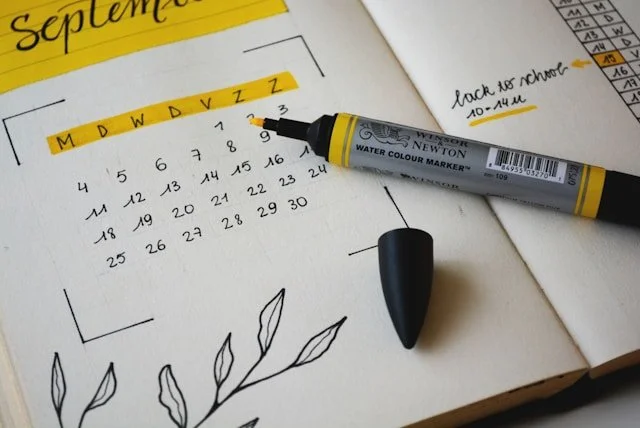
Practical ways to build routines, time skills, and independence
You remind your child to pack their bag. Again. The next morning, the homework is still on the table. Or your child promises to start a project early, only to rush through it the night before it is due.
It is easy to feel frustrated. It may look like carelessness or poor motivation. In many cases, however, what you are seeing reflects developing executive function skills.
Executive function skills in children are the mental processes that support planning, organisation, time management and self-control. These skills are largely associated with the prefrontal cortex, an area of the brain that continues developing well into adolescence. When expectations outpace development, children struggle not because they do not care, but because they do not yet have the internal systems to manage the demand.
What Are Executive Function Skills?
Executive functioning refers to higher-order thinking processes that help us manage ourselves and our goals.
Psychologists commonly describe three foundational components:
Working memory, which allows children to hold and use information in mind
Inhibitory control, which helps them resist distractions or impulses
Cognitive flexibility, which enables them to adapt when plans change
From these core abilities emerge more visible skills such as planning, organisation and time management.
These capacities develop gradually. A younger primary school child relies heavily on adult scaffolding. As the brain matures, children increasingly internalise these regulatory processes. Expectations must therefore be developmentally realistic.
How Executive Function Difficulties Present
Executive function challenges usually appear in everyday routines. A child may frequently forget homework, misplace belongings, struggle to start tasks independently or underestimate how long assignments will take. Despite repeated reminders, school bags remain cluttered and deadlines feel overwhelming.
In high-expectation academic environments, executive function demands can quickly exceed a child’s developmental readiness. Over time, repeated struggles may affect confidence. Some children begin to describe themselves as “lazy” or “not good at school”.
For some children, executive function difficulties are more pronounced. Many children diagnosed with Attention-Deficit/Hyperactivity Disorder experience significant challenges in planning, organisation and time management. However, executive weaknesses can also occur in children without a formal diagnosis.
The key shift is recognising that these are skill-based challenges that can be taught and strengthened.
From Reminding to Teaching
Repeated reminders rarely build executive skills. Explicit teaching does.
Break Tasks into Manageable Steps
When we say “Get ready for school”, we are asking a child to hold multiple steps in mind, sequence them and monitor completion. That is cognitively demanding.
Instead, make the steps visible. Younger children benefit from simple checklists. Older children may need help identifying what “finish your project” actually involves. Clarity reduces overwhelm.
Make Time Concrete
Time is abstract. Many children genuinely struggle to sense how long tasks take.
Using timers or writing down start and end times helps externalise time. Over repeated experiences, children begin to develop a more accurate internal sense of duration.
Teach Backward Planning
If an assignment is due on Friday, sit with your child and work backwards. When should research be completed? When should drafting begin? This approach helps children understand that larger tasks are built from smaller, scheduled actions.
Planning is not instinctive. It is learned through guided practice.
Strengthening Organisation Through Structure
Organisation is not about perfection. It is about predictability.
Rather than repeatedly urging a child to “be more organised”, help create simple systems. One folder per subject. One designated location for completed homework. One consistent place for the school bag.
The “one home” principle is especially effective. Frequently used items should always return to the same location. Repetition builds automatic habits, reducing the mental effort required each day.
A brief weekly reset, such as clearing out the school bag and reviewing upcoming tasks, can further support organisation. Short, consistent routines are more sustainable than dramatic overhauls.
Emotional Regulation and Executive Function
When a child feels overwhelmed, anxious or frustrated, their ability to plan, organise and problem-solve becomes less efficient. Strong emotions can temporarily reduce access to higher-level thinking skills. This is why a child who knows what to do may still struggle in the moment.
Supporting emotional regulation helps restore access to those thinking skills. Labelling emotions, modelling calm responses and teaching simple pause strategies can help children settle before returning to the task.
A regulated child is better able to use planning strategies that have already been taught.
What to Be Mindful Of
Under pressure, it is natural to step in and complete tasks for your child. However, consistent over-helping can unintentionally limit skill development.
Similarly, interpreting executive function struggles as laziness can erode confidence. These difficulties are often developmental and skill-based rather than purely motivational.
Introducing one supportive structure at a time is generally more effective than attempting to change everything at once.
Final Thoughts
Executive function skills in children underpin planning, organisation and self-regulation. They are not fixed traits. They are capacities that develop gradually with guidance and practice.
When we shift from repeated reminders to structured teaching, children begin to build independence. Progress may not be immediate, particularly in academically demanding contexts, but small daily habits create meaningful long-term change.
With realistic expectations, consistent scaffolding and patience, most children can strengthen their executive function skills and grow in confidence along the way.