
Autism and Play: Supporting Play Skills in Daily Life
Understanding play in autism and how everyday interactions can support communication and social development.
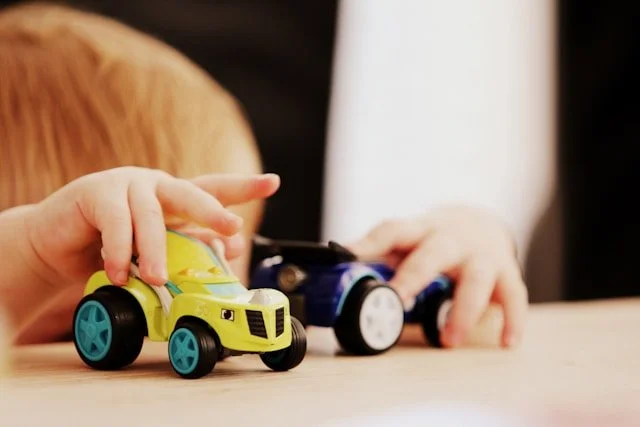
You may notice your child playing in ways that feel unfamiliar. Perhaps they prefer spinning the wheels of a toy car rather than driving it, or they seem more comfortable playing alone than with others. It can feel confusing, and at times, worrying.
These differences are more common than many parents realise. Play may look different in children with autism, but it is still meaningful. With the right support, everyday moments can become powerful opportunities for growth.
How Play May Look Different
Children on the autism spectrum often explore toys and activities in unique ways. For example, they may:
Repeat the same action, such as lining up objects
Focus on specific parts of a toy (e.g., spinning wheels)
Prefer playing independently
Find pretend play less intuitive
These patterns are linked to differences in sensory processing, social understanding, and flexible thinking. Rather than trying to change how your child plays, it is more helpful to build on what they are already doing.
Why Play Still Matters
Play supports key areas of development, including:
Communication and language
Social interaction and shared attention
Problem-solving and flexible thinking
Supporting play is not about pushing your child to behave in a certain way. It is about gently expanding their experiences so they can engage more comfortably with the world around them.
How to Support Play Skills in Children with Autism at Home
(1) Start with What Your Child Enjoys
Your child’s interests are the best starting point. When you join in what they already enjoy, play becomes more engaging and less stressful.
For instance, if your child enjoys trains, you might sit beside them and line up the trains together. Over time, introduce small changes such as making the train move or stopping at a “station”.
Keep changes small and manageable so your child stays comfortable and engaged.
(2) Join Before You Guide
It is natural to want to show your child how to play, but connection comes first.
Try to:
Sit at your child’s level
Observe before stepping in
Imitate their actions
When your child sees you following their lead, they are more likely to stay engaged. This creates the foundation for interaction, after which you can gently introduce new ideas.
(3) Keep Language Simple and Meaningful
Children with autism may find long or abstract language difficult to process. During play:
Use short, clear phrases (e.g., “go”, “stop”, “push”)
Pair words with actions
Repeat key words consistently
This helps your child connect words with meaning, supporting both understanding and communication over time.
(4) Build Turn-Taking Naturally
Turn-taking does not need to feel structured. It can grow naturally through play.
Simple ways to practise include:
Rolling a ball back and forth
Taking turns pressing buttons
Pausing briefly and waiting for your child’s response
Even small moments of back-and-forth interaction help your child experience social rhythm.
(5) Use Everyday Moments as Opportunities
You do not need special toys or structured sessions. Daily routines offer many natural opportunities for play.
For example:
Bath time: pouring, splashing, exploring cause and effect
Mealtimes: turn-taking, playing with textures
Dressing: turning routines into simple games
These everyday interactions make learning feel natural and reduce pressure on both you and your child.
(6) Follow Your Child’s Pace
Every child develops at their own pace. Some may take longer to engage in shared play, and that is okay.
Look for small signs of progress:
Brief eye contact
Smiling or vocalising
Staying engaged slightly longer than before
These small changes are meaningful and build over time.
When to Seek Support
If your child shows very little interest in interacting during play, or if you feel unsure how to support them, speaking with a psychologist or therapist can be helpful. Early guidance allows strategies to be tailored to your child’s needs.
Final Thoughts
Supporting play in children with autism begins with connection. By following your child’s interests, joining in their play, and gently expanding their experiences, you create opportunities for learning in a way that feels safe and enjoyable.
Small, consistent moments in everyday life can make a meaningful difference over time.