
Gross Motor Difficulties in Children: Signs Parents Miss
Spot subtle movement challenges early and learn when OT support helps.
As parents, we notice the little ways our children move- from running and jumping to balancing and sitting. Sometimes we catch ourselves thinking, “They seem a bit awkward,” or “I’m sure they’ll grow out of being clumsy.” It can be hard to tell what’s simply part of growing up and what might need a closer look.
Everyday movements like running, jumping, or sitting upright are all part of gross motor control. When these movements feel harder than they should, it can quietly affect a child’s confidence, energy levels and comfort in their own body. This article is here to help you understand what gross motor control looks like in daily life, what subtle signs to watch out for, and how it connects to your child’s overall development
What Is Gross Motor Control?
Gross motor control refers to how smoothly, efficiently, and confidently a child moves their body. It includes:
Balance,
Coordination,
Core strength and posture
Proximal stability
Bilateral coordination (awareness and ability to use both sides of the body fluidly)
Motor planning (ability to have an idea, plan and carry out movements).
Gross motor control isn’t about being “sporty” or athletic. It’s about whether everyday movements feel easy or effortful.
In the pyramid of learning framework, gross motor control sits within what we call sensory-motor development. This means movement skills are built on foundational sensory systems, including:
Vestibular
Proprioceptive
Tactile
When these sensory foundations are strong, movement feels natural and automatic. When they are less efficient, a child may appear clumsy, cautious, easily fatigues or hesitant – even though they are trying their best.
If your main concern is handwriting or hand skills, our article on fine motor difficulties might be worth having a read.
Everyday Activities That Can Be Affected
Motor control challenges often show up in subtle ways, even in children who may be look like they are coping well socially and academically. You might notice:
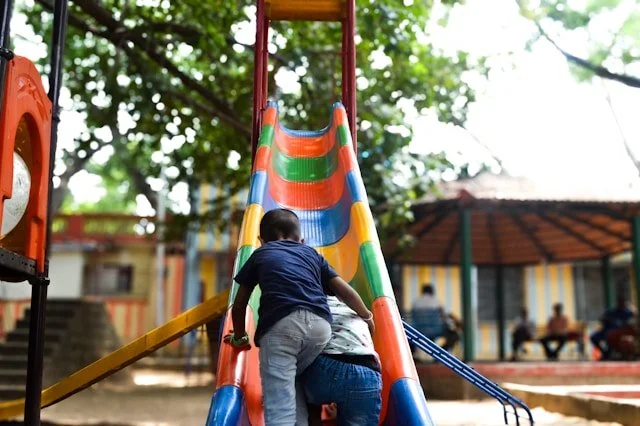
At the playground: Avoiding climbing structures, moving cautiously on swings and slides, hesitating before jumping, preferring to stay grounded
During PE or sports: Struggling to keep up, often being “out” in games, seeming unsure of where their body is in space, difficulty catching or coordinating movements, running everywhere but not following the target
In the classroom: Slouching at the desk, constantly shifting positions, leaning heavily on furniture, tiring quickly when sitting upright, hooking their legs behind their chair, bumping into classmates’ tables and chairs,
At home: Bumping into furniture, needing extra time to get dressed, difficulty tying shoelaces or managing tasks at home.
These signs are often subtle and easy to overlook – especially when the child is otherwise doing well.
When Should Parents be Concerned?
Consider seeking support if:
Your child consistently avoids movement-based activities
They get frustrated and fatigue quickly as compared to same age peers
Teacher comments on poor posture and restlessness
Easily frustrated with physical tasks
You have a persistent gut feeling that something feels harder for them than it should.
Early support can make a meaningful difference. Strengthening the sensory motor foundation can improve not just movement, but also endurance, persistence, confidence and participation in daily life.
How Occupational Therapy Can Help
Occupational therapy looks at the whole child – not just isolated skills. Rather than asking children to repeatedly practice movements that are already difficult, we first seek to understand why those movements are challenging. Using the pyramid of learning as a guide, our occupational therapists may look at foundational sensory systems that supports development.
We also carefully analyse everyday tasks and roles – such as classroom participation, playground play and self-care routines – to understand your child’s strengths, challenges and unique learning style.
From there, therapy is tailored to build strong foundations. When the base of the pyramid is supported, movements become more efficient, less effortful and more confident. Our goal isn’t to push children to “try harder to perfection”. Its to help their body feels safe and ready for challenges in their everyday environment.
Curious About Occupational Therapy?
If you’ve been wondering whether things feel harder for your child than they should, trusting that instinct is okay. Sometimes, a little extra help can make movement feel less like a struggle and a lot more like play. If you’d like to learn more or explore whether occupational therapy might be helpful, we’re here to support you.