
Supporting Neurodivergent Children at Mealtimes
Children with autism or ADHD may experience feeding differences linked to sensory processing, motor coordination, body awareness, or attention regulation. What may look like "picky eating” or “disruptive behaviour” can sometimes be a child’s way of coping with sensations or demands that feel overwhelming.
The strategies below focus on understanding what may be happening beneath the behaviour and responding in ways that support your child’s regulation and comfort around mealtimes.
(1) When Your Child with Autism Rejects New Food
Rather than forcing, bribing, or cajoling: “You have to finish this or no TV.”
Start by observing patterns. Some children prefer predictability in texture, temperature, colour, brand, or even how food is presented on the plate. Instead of focusing on “newness,” try building on similarities with foods they already enjoy.
You might say: “This sweet potato mash feels similar to the potato mash you love. I will put a small scoop next to your chicken.”
Keep new foods small and non-threatening, while familiar foods remain the anchor of the meal. Over time, these gentle exposures can help build tolerance without triggering distress. For many neurodivergent children, a sense of safety needs to come before variety.
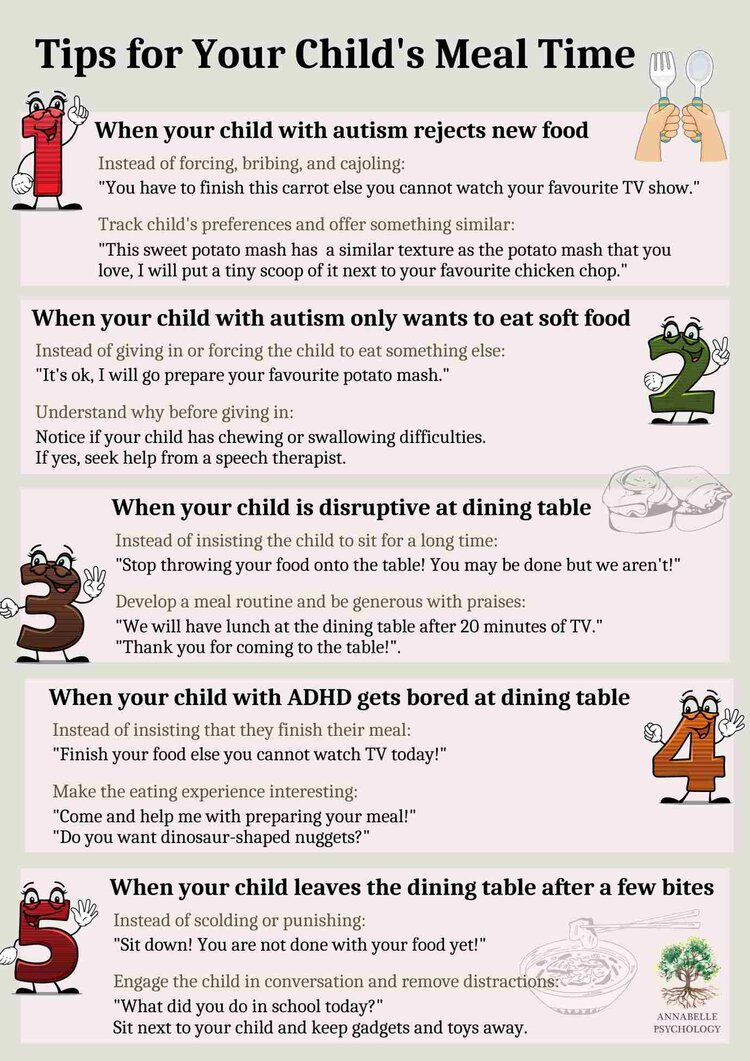
(2) When Your Child with Autism Only Wants to Eat Soft Food
Before preparing the usual mash again, gently consider why. Is it simply preference, or could chewing and swallowing feel physically uncomfortable or tiring?
You might notice:
Frequent gagging
Very prolonged chewing
Avoidance of mixed or textured foods
Coughing or appearing uncomfortable during meals
If these patterns are present, it may be helpful to consult a qualified healthcare professional, such as a speech and language therapist, who can assess feeding and oral-motor skills more broadly. Understanding the underlying reasons can prevent unnecessary battles at the table and ensure your child receives the right support if needed.
(3) When Your Child Is Disruptive at the Dining Table
Behaviours such as throwing food or climbing off the chair can sometimes reflect regulation difficulties rather than defiance.
Some common reasons include:
Sensory overload
Difficulty sitting still
Feeling finished before others
Fatigue
A need for movement
Instead of insisting they remain seated until everyone finishes, consider creating predictable and realistic mealtime expectations:
“We will have lunch at the dining table after 10 minutes of TV.”
“Thank you for coming to the table.”
Keep expectations clear and achievable and praise specific behaviours you would like to see repeated. If your child is clearly finished eating, it may be appropriate to excuse them once they have checked in with you, even if others remain at the table. A little flexibility can reduce tension for everyone.
(4) When Your Child with ADHD Gets Bored at the Dining Table
Sitting still and focusing on eating can be genuinely challenging for children with attention difficulties.
Instead of saying, “No leaving the table until you finish your food.”
Consider ways to increase engagement while maintaining structure:
Invite them to help prepare the meal: “Would you like to help stir this?”
Offer playful presentations such as shapes, colours, or themes
Keep meals time-limited rather than open-ended
Allow subtle movement, such as a small foot fidget while seated
Shorter, structured meals often work better than prolonged ones that stretch beyond a child’s attention and regulation window.
(5) When Your Child Leaves the Dining Table After A Few Bites
Leaving the table quickly can sometimes indicate that the environment feels overstimulating or distracting.
Instead of reacting with: “Sit down! You are not done with your food yet!”
Pause and consider whether:
The environment is overstimulating
There are distractions, such as toys or screens, competing for attention
Your child is unsure what is expected during meals
Helpful adjustments may include:
Removing toys and screens during mealtime
Sitting beside your child rather than across the table
Engaging in light conversation such as: “What was the best part of school today?”
When children feel calmer and the environment is manageable, they are better able to remain at the table and focus on eating. Mealtimes can be relational spaces, not just nutritional ones.
A Gentle Reminder for Parents
Feeding a neurodivergent child often requires a different kind of flexibility and observation. What appears to be resistance may actually be your child responding to sensory discomfort, fatigue, or difficulty sustaining attention. Progress may look different from what you expected, and that is okay.
Many families find that mealtimes improve when expectations are adapted to the child’s sensory profile and regulation capacity. Predictability, low pressure, and clear routines can make eating feel more manageable.
If feeding challenges feel persistent or overwhelming, professional guidance can help identify the underlying factors and offer strategies tailored to your child’s unique needs. If you would like support, our team is here to help.
Many parents also often struggle to encourage their children to eat their greens. If this is something that you’re experiencing too, with got you covered with this handy article.